
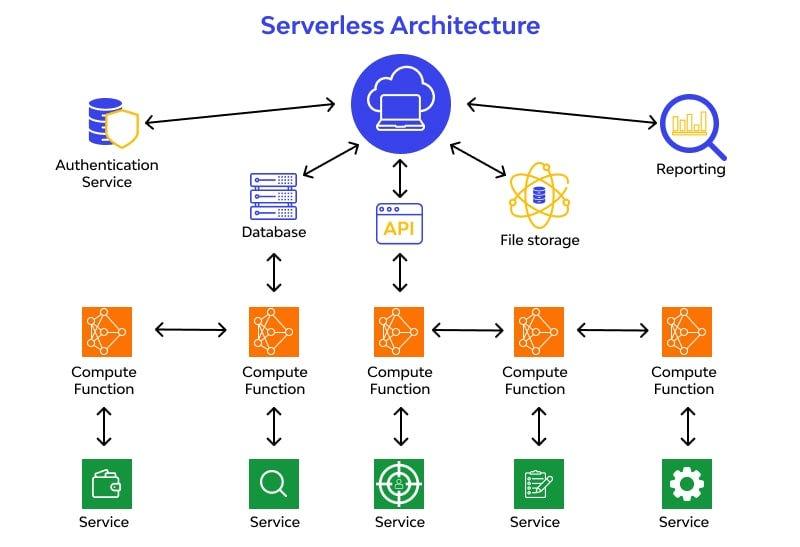
Serverless computing is a cloud execution model where the cloud provider manages server infrastructure entirely, automatically allocating resources and scaling based on demand. You write code, deploy it, and pay only for the compute time consumed.
Ideal Use Cases
API backends that handle variable request volumes benefit from automatic scaling. Data processing pipelines that run periodically can execute without maintaining always-on servers. Scheduled tasks and automated workflows run cost-effectively as serverless functions. Real-time file processing triggered by uploads or events scales naturally with demand. Chatbots and notification systems that experience unpredictable traffic patterns.
When to Avoid Serverless
Long-running processes that exceed execution time limits are not suitable. Applications requiring persistent connections like WebSocket servers face limitations. Workloads with consistently high, steady traffic may be more cost-effective on traditional servers. Applications with strict latency requirements may experience cold-start delays.
Cost Benefits
The pay-per-execution model means zero cost when your code is not running. For workloads with variable or unpredictable traffic patterns, this can reduce infrastructure costs by 50 to 70 percent compared to provisioned servers.
At oosoft, we help businesses identify which workloads benefit from serverless architecture and implement solutions across AWS Lambda, Azure Functions, and Google Cloud Functions. Contact us at oosoft.co.in/contact-us.