
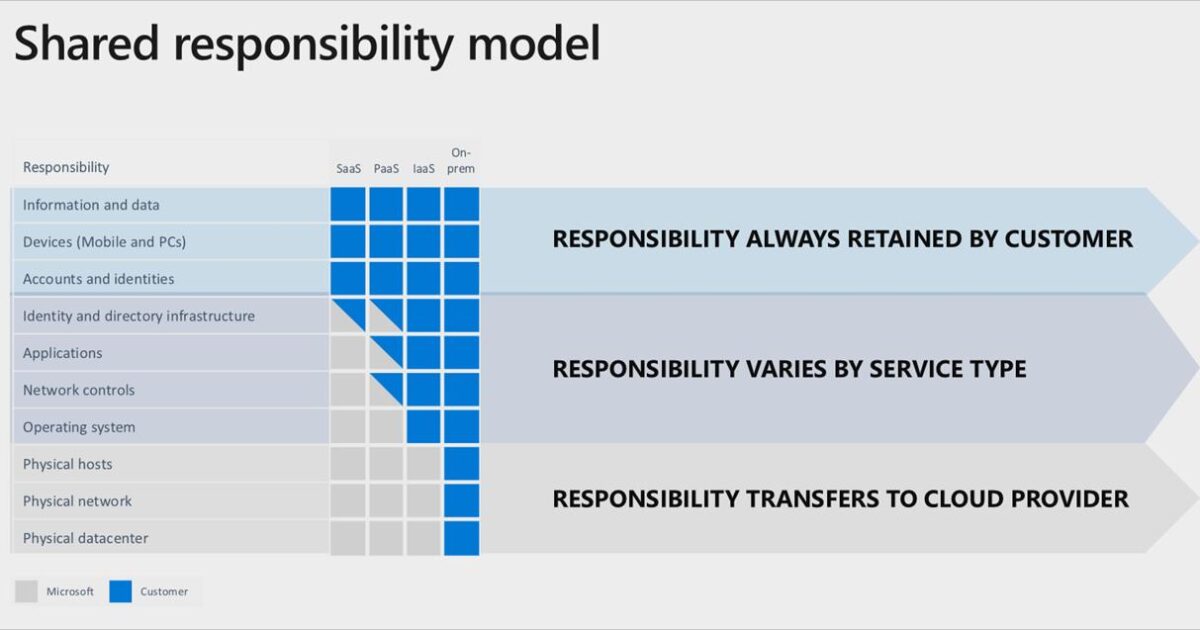
One of the most critical concepts in cloud computing is the shared responsibility model. Misunderstanding this model is the primary reason for cloud security breaches.
What the Cloud Provider Manages
Cloud providers like AWS, Azure, and GCP are responsible for security of the cloud. This includes the physical security of data centers, the network infrastructure and hardware, the hypervisor and virtualization layer, and the global network backbone.
What You Manage
Customers are responsible for security in the cloud, which includes operating system configuration and patching, application security and code vulnerabilities, data encryption at rest and in transit, identity and access management, network security groups and firewall rules, and compliance with industry regulations.
Common Misconfigurations That Cause Breaches
Publicly accessible storage buckets have exposed billions of records. Overly permissive security groups allow unrestricted access to critical services. Unused credentials and access keys become attack vectors. Unencrypted data at rest violates compliance requirements. Missing logging and monitoring prevents breach detection.
Best Practices
Implement cloud security posture management tools that continuously scan for misconfigurations. Use infrastructure as code to ensure consistent, auditable deployments. Enable comprehensive logging and monitoring across all services. Regularly audit access permissions and remove unused credentials.
At oosoft, we help businesses understand and implement the shared responsibility model effectively. Learn more at oosoft.co.in.